The End of Linear Globalization: Economics, Security, and the New World Order
Economics, Security, and the New World Order • How Great-Power Rivalry and Economic Nationalism are Reshaping Global Interdependence
The End of Linear Globalization: The Fractured Consensus
When the Cold War came to an end, Francis Fukuyama (1992) famously described it as the "end of history." His idea was that liberal democracy and market-based globalization would dominate the world, pushing out ideological conflict for good. That belief helped drive a wave of optimism in the 1990s and early 2000s, years marked by the fast growth of multilateral institutions, the free movement of capital, and deeply integrated supply chains (Frieden, 2006; Sachs, 2005).
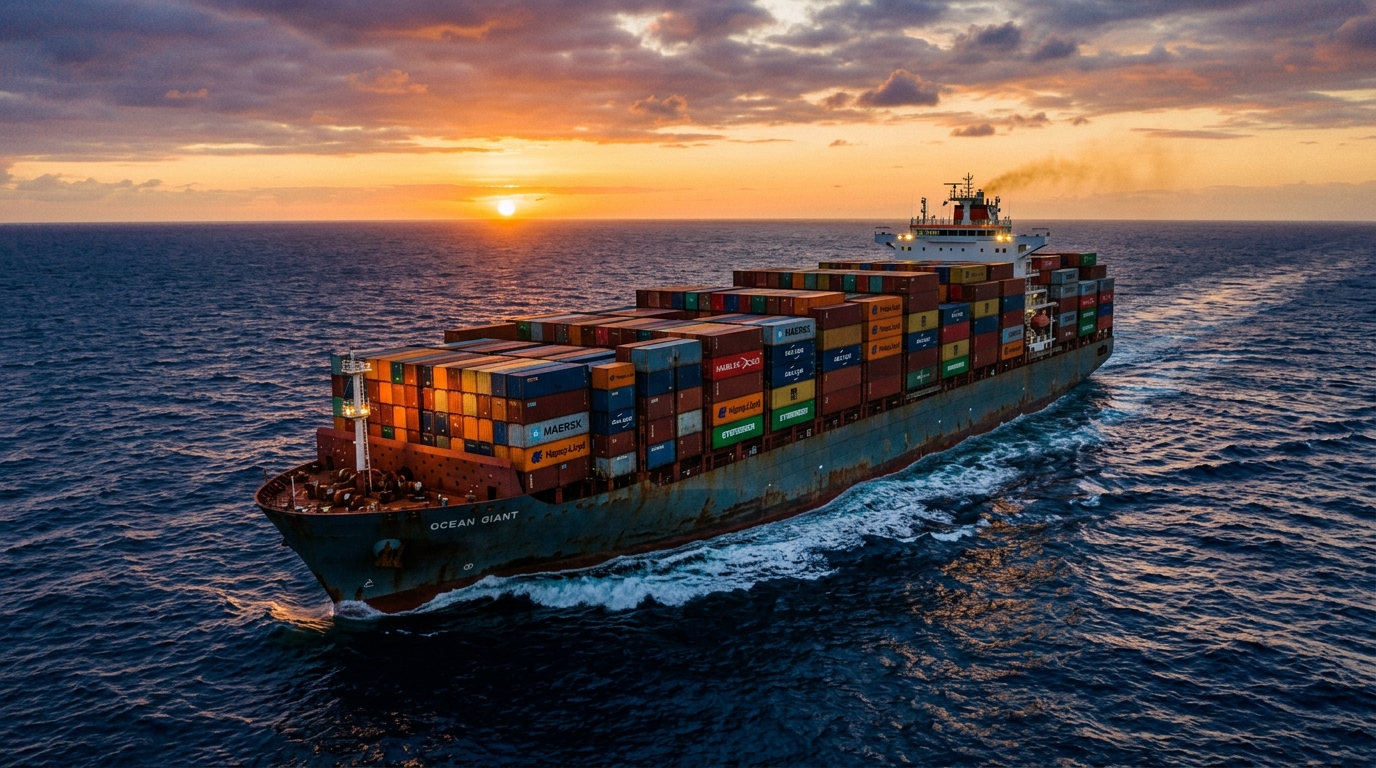
But the 21st century hasn't followed that idea. Instead, it's been defined by the return of nationalism, rising strategic tensions, and regional conflicts that have challenged the post-Cold War order (Crawford, 2023). The unipolar moment that followed 1991, once led by U.S. power and neoliberal economic thinking, has fractured. Now, the global stage is shaped by renewed great-power rivalry and economic nationalism that threaten to unravel the very systems that once upheld globalization (Owen, Brzezinski, & Okita, 1984).
Today's economic battles also play out in cyberspace, and through regulation; tariffs on semiconductors, data localization laws, and even digital espionage are now part of the mix. Leaders now face tough choices between efficiency and resilience, growth and sustainability, openness and control. Globalization isn't vanishing, but it is transforming into a posture of defensive globalization.
Theory & Geopolitics: Power Dynamics and Vulnerabilities
The interaction between geopolitical competition and economic theory has profoundly influenced the structure and vulnerabilities of global trade and investment. Insights from both disciplines help explain how power dynamics, territorial imperatives, and technological shifts shape international economic relations (Krugman, 1990; Harris Foundation, 1937).
Agnew (2007) challenges the static, state-centric "territorial trap," arguing that geopolitical power emerges through dynamic interactions and networked spatial ties. Concepts like political landscapes explain how emerging powers (such as India and Brazil) reconfigure global trade through geographic and historical claims, creating multi-polar trading corridors that defy traditional Western-dominated institutions.
Kelly (2020) emphasizes enduring territorial control, drawing on the classical theories of Halford Mackinder and Alfred Thayer Mahan. He highlights intensifying competition over strategic chokepoints—such as the Strait of Hormuz, the Bab el-Mandeb, and the Malacca Strait—as well as competition over resource-rich regions and the strategic militarization of the South China Sea.
Baldwin (2016) identifies Information and Communications Technology (ICT) as the core driver of the "Second Unbundling"—the geographic separation of manufacturing processes across international borders. While dramatically reducing coordination costs and raising efficiency, this deep fragmentation introduces severe vulnerabilities, including intellectual property theft, cyber-espionage, and data localization mandates, ultimately contributing to slowbalization.
Rodrik (2007, 2011) formulated the inescapable Globalization Trilemma: nations cannot simultaneously achieve deep economic integration (hyperglobalization), democratic governance, and national sovereignty. They must choose two. This structural impossibility explains the widespread domestic political backlash in democratic nations and the rising imperative of defensive globalization.
Click an institutional configuration below to see which pillar of the Trilemma is inevitably sacrificed:
Historical Turns: From Post-War Reconstruction to Ideological Weaponry
The history of global trade and investment is full of turns, shaped by politics as much as by economic ideas. After World War II, institutions like the International Monetary Fund (IMF) and the International Bank for Reconstruction and Development (World Bank) were meant to rebuild shattered economies. It was a moment full of optimism (Frieden, 2006).
However, while this period looked like the beginning of a golden age for international capitalism, it came with deep structural inequalities. Countries in the industrialized West were the biggest winners, while many developing nations were left behind (Fishlow, 1980; Raffer, 1987).
| Historical Epoch | Institutional Mechanism | Geopolitical & Distributional Outcome |
|---|---|---|
| Post-WWII Order (1944–1970s) | Bretton Woods institutions (IMF, World Bank, GATT); fixed dollar-gold parity. | Industrialized Western economies experienced sustained growth; developing nations remained peripheral commodity exporters (Chang, 2002). |
| Cold War Trade Statecraft (1947–1989) | Strategic embargoes (CoCom), preferential trade pacts, ideological bloc alignment (Preeg, 1974). | Trade operated as a direct instrument of containment and ideological alliance-building, subordinating market efficiency to national security. |
| Post-1991 Unipolar Era (1991–2016) | WTO creation (1995), China's accession (2001), hyper-financialization, multinational offshoring. | Unprecedented cross-border capital flows and poverty reduction in East Asia, alongside deep deindustrialization in Western manufacturing heartlands. |
| Contemporary Fracturing (2016–Present) | Unilateral tariffs, industrial subsidies (CHIPS, IRA), export controls, and near-shoring mandates. | Erosion of multilateral dispute settlement (WTO Appellate Body paralysis) and the bifurcation of high-tech supply chains. |
Things became even more complicated when the Cold War began. Trade became a weapon of ideology. Preeg (1974) explains how trade policies were used strategically, building alliances and isolating rivals. Then came the collapse of the Soviet Union in 1991. Globalization offered a new promise: economic growth through openness, integration, and technology transfer.
Yet, the outcomes were highly uneven. Developing economies that engaged indiscriminately without defensive domestic safety nets suffered de-industrialization and volatile financial contagion (Stiglitz, 2002). The post-Cold War phase showed conclusively that globalization was not a one-size-fits-all solution.
Recent Crises: The Fragility of Interconnected Systems
The early 2000s have made it clear that global trade and national control don't always move in the same direction. Some of the most critical events in recent history have shown how fragile and surprisingly resilient our interconnected world can be (Krugman, 1998).
The U.S.-China trade war kicked off in 2018 when the two largest economies began hitting each other with tariffs. Initiated under Section 301 investigations into intellectual property practices and industrial subsidies, the conflict rapidly expanded from raw materials (steel and aluminum) to over $350 billion in manufactured consumer goods.
The World Trade Organization (2022) estimated that between 2018 and 2021, global GDP dropped by about 0.5% because of this economic showdown. Rather than balancing bilateral deficits, the tariffs disrupted supply networks, diverted trade to secondary intermediaries (such as Vietnam and Mexico), and signaled the end of unconstrained bilateral commercial integration.
Russia's invasion of Ukraine turned natural gas infrastructure (Nord Stream) and agricultural transit corridors into active tools of strategic pressure. The fighting immediately halted operations across the Black Sea grain trade, severely restricting exports from two of the world's most vital agricultural suppliers.
The UNCTAD (2021, 2022) reported a 20% spike in global wheat prices immediately after the war started, triggering acute food insecurity across import-dependent nations in North Africa and the Middle East. The message was unmistakable: modern conflicts don't stay local; weaponized interdependence converts geographic chokepoints into worldwide humanitarian and price shocks.
When the United Kingdom voted to leave the European Union, it stepped away from the most advanced, frictionless regional economic partnership in the world. Driven by populist demands to "take back control" of national borders and laws, the UK opted out of the single market and customs union.
The long-term economic costs are clear: the UK's decision to leave the single market reduced inward foreign investment by 11% and left its regulatory systems more fragmented. It provided a concrete empirical demonstration of Rodrik's trilemma: reclaiming total national sovereignty inevitably creates severe transaction costs and market friction for domestic businesses.
The Development Gap & Adaptive Sovereignty
When global tensions rise, developing nations often pay the steepest price. They lose access to key export markets and face even more food and energy insecurity than before. At the same time, the multilateral rules that once helped keep international trade predictable and fair are starting to break down. The World Trade Organization has noted that more countries are turning away from universal rules toward bilateral, regional deals and one-sided trade moves (WTO, 2022).
In recent years, foreign direct investment (FDI) has started to favor regions seen as politically and geographically stable—a strategic shift known as "near-shoring" and "friend-shoring." This imbalance creates widening global hierarchies of wealth. As Thomas Piketty (2014) shows, wealth keeps accumulating faster than the overall economy grows ($r > g$). The result is a widening structural gap between capital-rich asset owners and those who rely solely on wages.
The challenges that come with rising geopolitical tensions don't have easy solutions. Tackling them requires smart, flexible policies that work both at home and through international cooperation. At the national level, strong democratic institutions are one of the best defenses.
Amartya Sen’s (1999) view of "development as freedom" argues that policies promoting public education, healthcare, and civil liberties make societies far more adaptable and resilient to external economic turbulence.
Technology, Climate, & The New World Order
The next few decades are set to reshape the global economy in big ways. Economist Richard Baldwin (2016) suggests that thanks to digital tools like Artificial Intelligence and 3D printing, we might see more localized, automated manufacturing. This shift can dramatically reduce dependence on long, vulnerable global supply chains, but it also threatens to create new forms of technology-based inequality between nations possessing advanced algorithmic intellectual property and those without.

Simultaneously, climate change is actively redrawing the global geopolitical map. Environmental pressures such as acute water shortages, agricultural desertification, and climate-induced migration are turning borders and transit corridors into volatile conflict zones.
Joseph Stiglitz (2007) suggests that navigating the transition to a low-carbon economy will require a new kind of global architecture—replacing outdated, tariff-focused trade agreements with binding green investment pacts. This path demands difficult structural choices: balancing efficiency with resilience, and economic growth with ecological and environmental limits.
The globalization that emerges from this period of upheaval will differ fundamentally from its late-20th-century predecessor. It will likely be:
- More regionalized in its physical supply chains and manufacturing clusters.
- More conditional in its market access, requiring compliance with national security and carbon standards.
- More explicit about the political values, institutional norms, and security alignments embedded in economic relationships.
The task ahead is not to abandon economic interdependence, but to reconstruct it on realistic foundations that acknowledge the realities of geopolitical competition while preserving space for international cooperation where common interests align.